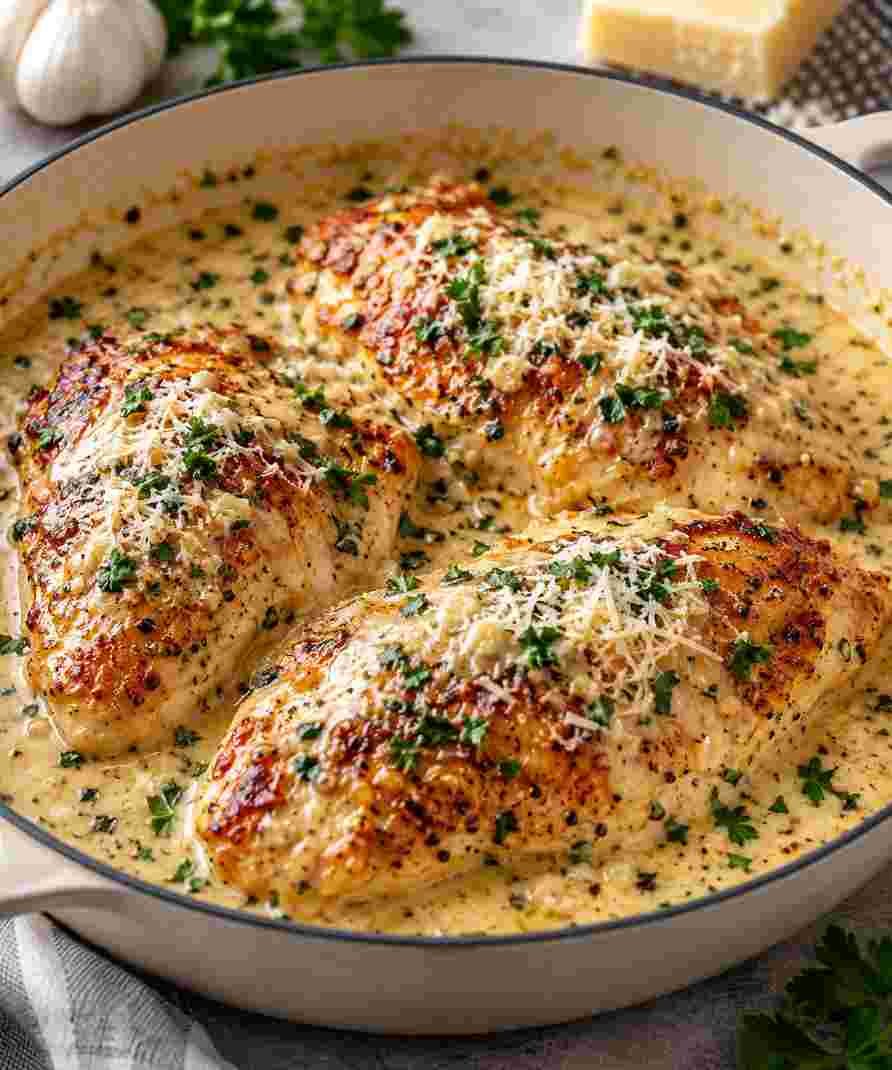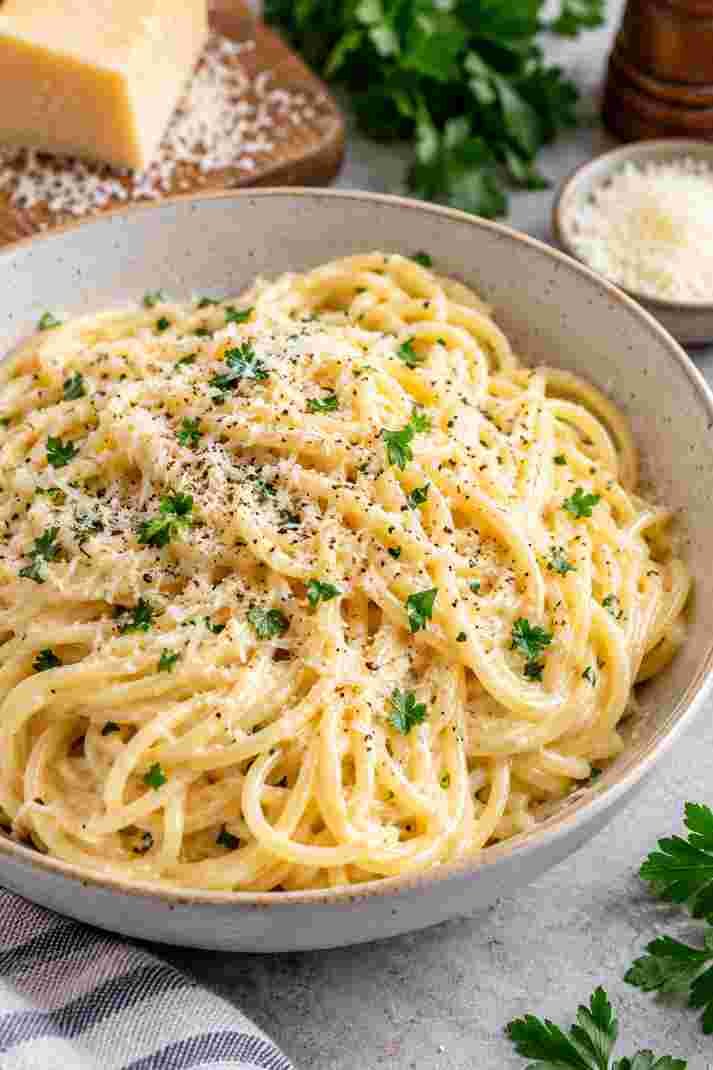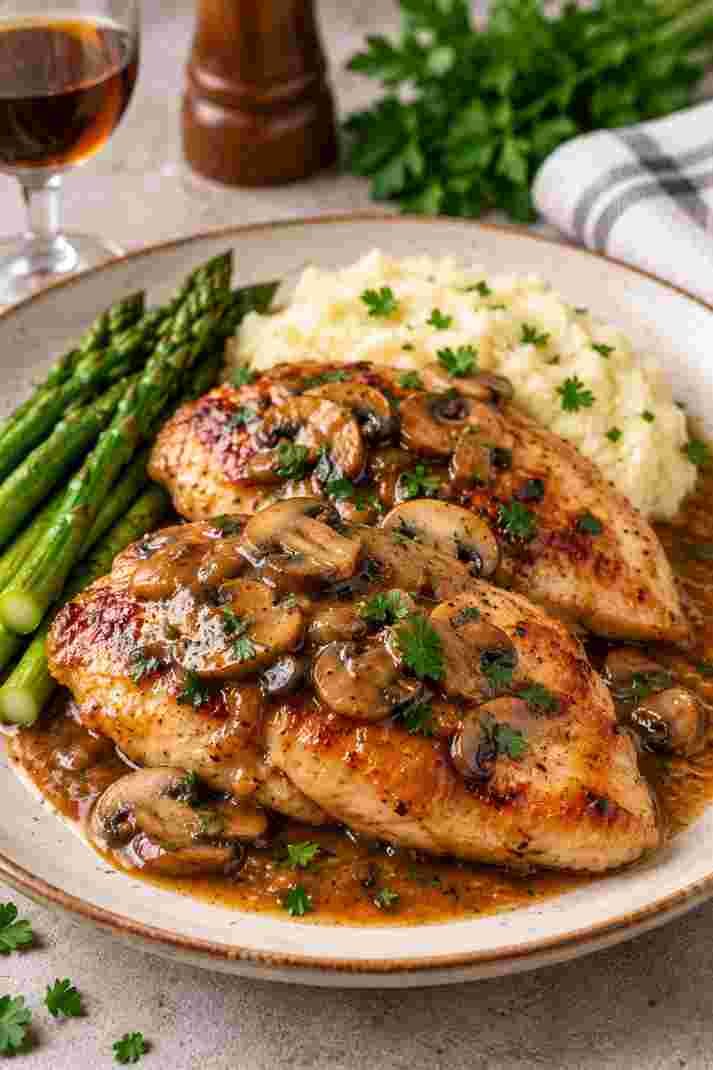
Chicken Madeira is the kind of dinner that feels a little fancy without requiring restaurant-level cooking skills. Tender chicken breasts are lightly coated and pan-seared until golden, then finished in a rich Madeira wine sauce with mushrooms, garlic, asparagus, Parmesan, and melted mozzarella. The sauce is savory, slightly sweet, and deeply flavorful, while the asparagus adds a fresh contrast to the creamy, cheesy finish. Serve it with mashed potatoes to soak up every bit of that sauce, and you have a comforting dinner that works just as well for a family meal as it does for a special occasion.
What Is Chicken Madeira?
Chicken Madeira is a popular chicken dish built around a reduced Madeira wine sauce. The chicken is browned in a skillet before being combined with mushrooms and a flavorful pan sauce. Asparagus and melted mozzarella are commonly added toward the end, giving the dish its recognizable combination of tender vegetables, juicy chicken, and gooey cheese. The important part is the sauce: allowing the wine and broth mixture enough time to reduce gives it a concentrated flavor instead of leaving it thin or watery.
Chicken Madeira Ingredients
For the Chicken
- 2 large boneless, skinless chicken breasts
- Salt and freshly ground black pepper, to taste
- 1 teaspoon garlic powder
- 1/4 cup all-purpose flour
- 1 to 2 tablespoons olive oil
For the Sauce
- 1 1/2 cups Madeira wine
- 1 cup chicken broth
- 1/2 cup beef broth
- 1/2 chicken bouillon cube
- 2 teaspoons Worcestershire sauce
- 1 tablespoon heavy cream, optional
- 1/2 teaspoon onion powder
- 1/2 teaspoon mustard powder
- 3 tablespoons all-purpose flour
- 2 tablespoons grated Parmesan cheese
For the Mushrooms, Asparagus and Topping
- 8 ounces cremini or baby bella mushrooms, sliced
- 12 asparagus spears, trimmed and cut in half
- 2 tablespoons butter
- 3 cloves fresh garlic, finely minced
- 1 cup shredded low-moisture mozzarella
Also Read: Texas Roadhouse Butter Recipe
How to Make Chicken Madeira
1. Prepare the Asparagus
Bring a pot of water to a boil and add the trimmed asparagus. Cook for about 3 to 4 minutes, just until the asparagus becomes tender but still has some bite. Drain immediately and rinse under cold water to stop the cooking process. Set it aside while you prepare the chicken and sauce.
2. Flatten and Season the Chicken
Slice each chicken breast horizontally to create thinner pieces. Place the chicken between sheets of plastic wrap and gently pound it until the pieces are about 1/2 inch thick. This helps the chicken cook evenly and keeps it from becoming dry. Pat the chicken dry, then season both sides with salt and pepper.
Mix the garlic powder with the flour and lightly coat each piece of chicken. Shake off any excess flour so you get a thin coating rather than a heavy crust.
3. Sear the Chicken
Heat the olive oil in a large skillet over medium-high heat. Add the chicken in batches if necessary so the pan does not become overcrowded. Cook for about 4 to 5 minutes per side, or until the chicken develops a golden crust and is nearly cooked through. Transfer the chicken to a plate and set aside.
4. Build the Mushroom and Madeira Sauce
Reduce the heat and add the butter to the same skillet. Add the minced garlic and cook for about 1 to 2 minutes, stirring frequently so it becomes fragrant without burning.
Pour in the Madeira wine and scrape the browned bits from the bottom of the skillet. Those little bits add a lot of flavor to the finished sauce. Add the sliced mushrooms and let everything gently simmer until the wine has reduced considerably and the mushrooms are tender.
5. Thicken the Sauce
Sprinkle the flour gradually into the skillet while stirring continuously. Cook for about 2 minutes to remove the raw flour taste. Combine the chicken broth, beef broth, bouillon, Worcestershire sauce, onion powder, mustard powder, and optional heavy cream in a separate container.
Slowly pour this mixture into the skillet while stirring. Bring the sauce to a gentle boil, then reduce the heat and let it simmer uncovered until it thickens and becomes noticeably more concentrated. Do not rush this step. A little extra simmering time can make a big difference in the depth of the sauce.
6. Finish the Chicken Madeira
Lower the heat and stir in the Parmesan cheese. Return the seared chicken to the skillet and spoon the mushroom sauce over each piece. Arrange the cooked asparagus around and over the chicken, then sprinkle the mozzarella evenly across the top.
Cover the skillet and cook over medium-low heat for several minutes, until the chicken is completely cooked and the mozzarella has melted. If your skillet is oven-safe, you can instead place it in a preheated 400°F oven for a few minutes to melt and lightly brown the cheese.
7. Serve
Serve the Chicken Madeira immediately while the cheese is warm and stretchy and the sauce is at its best. Creamy mashed potatoes make an especially good side because they catch the mushroom and Madeira sauce, but roasted potatoes, rice, or a simple green salad also work well.
Also Read: Garlic Parmesan Chicken
What You Can Do Better
The sauce is where this recipe really comes together, so give it time. If you remove it from the heat while it is still thin, the finished dish can taste flat even when the ingredients are good. Letting the Madeira and broth reduce concentrates the flavor and gives the sauce a richer texture.
Use fresh garlic instead of jarred garlic whenever possible. Freshly minced garlic gives the sauce a much cleaner flavor. For the mushrooms, cremini or baby bella mushrooms are a great choice because they have a firmer texture and deeper color, although regular white mushrooms will also work.
For the cheese, use freshly grated Parmesan and low-moisture mozzarella. Fresh mozzarella contains considerably more moisture and may not give you the same smooth, melted topping. If you want the chicken to stay juicy, avoid pounding it too aggressively and use a thermometer to check that the thickest part reaches 165°F.
Madeira Wine Substitutes
Madeira wine gives this dish its characteristic flavor, so it is the best option when available. If you cannot find it, dry Marsala, dry sherry, dry port, or dry vermouth can be used as alternatives. Keep in mind that changing the wine will slightly change the flavor of the finished sauce.
For a completely alcohol-free version, use a suitable non-alcoholic cooking wine or a carefully balanced mixture of white grape juice and a small amount of vinegar. The flavor will not be identical to traditional Chicken Madeira, but it can still produce a flavorful sauce.
Also Read: Slow Cooker Stroganoff
Tips for the Best Chicken Madeira
- Do not overcrowd the skillet: Cook the chicken in batches if needed so it browns instead of steaming.
- Let the sauce reduce: This is one of the most important steps for getting a rich, concentrated flavor.
- Use fresh garlic: It makes a noticeable difference in the sauce.
- Choose low-moisture mozzarella: It melts smoothly without releasing too much liquid.
- Grate Parmesan from a block: Freshly grated cheese melts more easily and adds better flavor.
- Don’t overcook the asparagus: It should remain bright and slightly crisp rather than soft.
- Check the chicken temperature: The thickest part should reach 165°F before serving.
What to Serve With Chicken Madeira
Mashed potatoes are one of the best choices because the creamy potatoes pair beautifully with the mushroom-wine sauce. You can also serve Chicken Madeira with steamed rice, roasted potatoes, buttered noodles, crusty bread, or a simple green vegetable. If the meal already feels rich, a crisp salad with a light vinaigrette can help balance it.
How to Store Leftovers
Allow leftover Chicken Madeira to cool before transferring it to an airtight container. Refrigerate it for up to 3 days. For longer storage, the cooked chicken and sauce can be frozen for up to 3 months. Thaw frozen leftovers in the refrigerator before reheating.
Reheat gently so the chicken does not dry out and the sauce does not separate. A covered skillet over low heat works well, and a small splash of broth can be added if the sauce has become too thick.
Also Read: Clam and Chowder Recipe
Chicken Madeira Nutrition
The nutritional values below are approximate and will vary depending on the exact brands and quantities of ingredients used. The estimate is based on four servings and does not include mashed potatoes or other side dishes.
| Nutrient | Approximate Amount Per Serving |
|---|---|
| Calories | Approximately 550–650 kcal |
| Protein | Approximately 45–50 g |
| Total Fat | Approximately 25–32 g |
| Saturated Fat | Approximately 10–14 g |
| Carbohydrates | Approximately 20–25 g |
| Fiber | Approximately 2–4 g |
| Sugar | Approximately 7–10 g |
| Sodium | Approximately 800–1,100 mg |
Also Read: Chicken and Parmesan Cheese Recipe
Frequently Asked Questions
Can I make Chicken Madeira without mushrooms?
Yes. Mushrooms contribute a lot of savory flavor to the sauce, but you can leave them out if you do not enjoy them. The sauce will still work, although it will have less earthy depth.
Can I use chicken thighs instead of chicken breasts?
Yes. Boneless, skinless chicken thighs can be used, although their cooking time may vary depending on their size and thickness. Make sure the chicken reaches 165°F internally.
Can I make Chicken Madeira ahead of time?
Yes. You can prepare the chicken and sauce ahead of time and refrigerate them. Reheat gently and add the mozzarella and asparagus near the end so the topping stays fresh and melts properly.
What wine is best for Chicken Madeira?
Madeira wine is the traditional choice and gives the sauce its distinctive character. A dry style works particularly well in a savory sauce. If it is unavailable, dry Marsala, dry sherry, dry port, or dry vermouth can be used as substitutes.
Why is my Madeira sauce too thin?
The most common reason is that the sauce has not reduced enough. Let it simmer uncovered for a little longer so excess liquid evaporates. If necessary, a small amount of flour or cornstarch slurry can also be used to adjust the consistency.