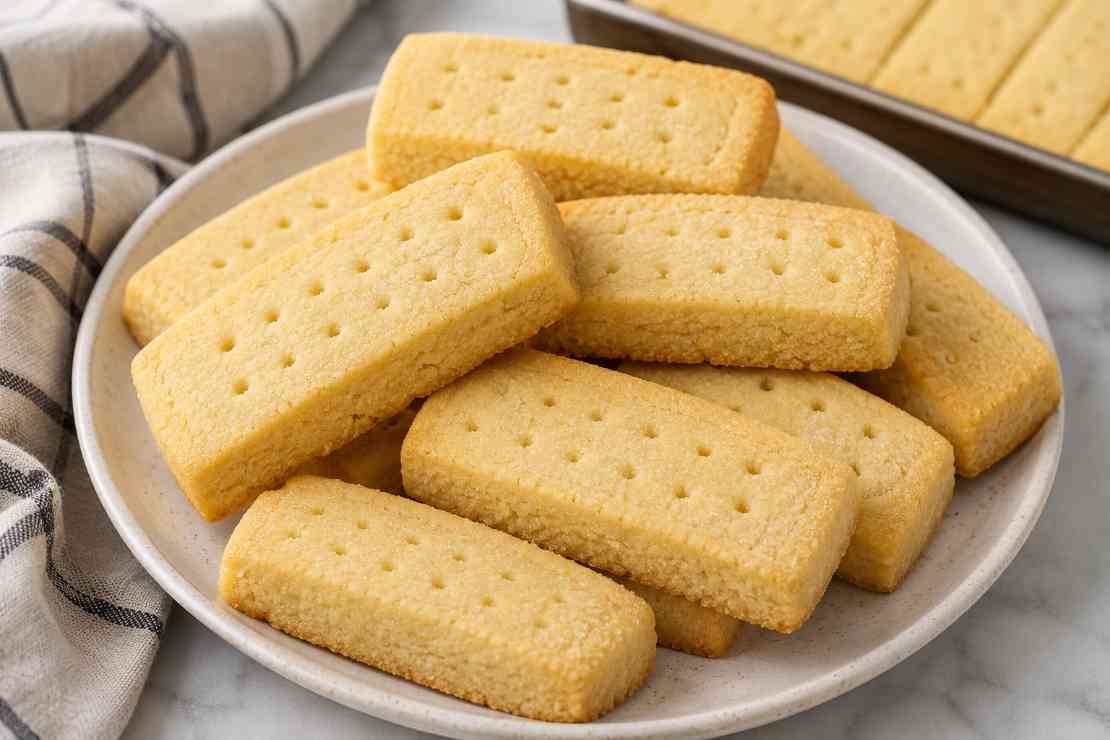
Shortbread cookies are one of those simple bakes where a few basic ingredients can produce something genuinely special. They are buttery, lightly sweet, tender and wonderfully crumbly, with a delicate texture that practically melts in your mouth. This homemade version takes inspiration from classic Scottish-style shortbread, keeping the ingredient list simple while focusing on the right technique for a soft, crisp and buttery cookie.
The secret is not adding lots of extra ingredients. Good butter, fine sugar and plain flour are enough. The important part is handling the dough gently and avoiding too much mixing, which helps keep the finished cookies tender rather than hard.
Shortbread Cookies Recipe
| Recipe Detail | Information |
|---|---|
| Prep Time | 10 minutes |
| Cook Time | 28–30 minutes |
| Cooling Time | About 1 hour |
| Total Time | About 1 hour 40 minutes |
| Servings | About 24 cookies |
| Category | Cookies / Dessert |
Ingredients
- 250 g salted butter, softened
- 90 g icing sugar or powdered sugar
- 300 g plain all-purpose flour
- 1/4 teaspoon salt, only if using unsalted butter
These cookies work best when the butter is properly softened rather than melted. Soft butter blends easily with the sugar and helps create a smooth dough without requiring heavy mixing.
Also Read: Maple Pecan Pie Bars
How to Make Shortbread Cookies
1. Prepare the Oven and Pan
Preheat your oven to 160°C (325°F). If you are using a fan-forced or convection oven, use about 150°C (300°F). Lightly butter a shallow baking pan and line it with parchment paper, leaving some paper hanging over the sides so the baked shortbread can be lifted out easily.
2. Cream the Butter and Sugar
Place the softened butter in a large bowl and beat until smooth and creamy. Add the icing sugar and mix until well combined. There is no need to whip the mixture for a long time; you simply want the butter and sugar to come together smoothly.
3. Add the Flour
Add about half of the flour and mix until it is mostly incorporated. Add the remaining flour and mix again. The mixture will look crumbly at first, which is exactly what you want. Use your hands to gently bring the dough together into a soft, smooth mass. Avoid kneading it like bread dough because too much handling can make shortbread firmer.
4. Press the Dough Into the Pan
Place the dough into the prepared pan and gently press it into an even layer. You can use the bottom of a glass or a small rolling pin to smooth the surface. Try not to press excessively hard, as compacting the dough too much can affect the delicate texture.
5. Partially Bake
Bake the shortbread for about 20 minutes, or until the edges have just started to turn a very light golden colour while the centre remains relatively pale. Shortbread should not become deeply brown.
6. Cut and Prick the Cookies
Take the pan out of the oven and, while the shortbread is still warm, carefully cut it into bars or squares. A fork can also be used to make small holes across the surface. Cutting the shortbread while it is partly baked helps produce cleaner pieces and reduces cracking.
7. Finish Baking
Return the pan to the oven and bake for another 8–10 minutes, or until the surface is lightly golden. Keep a close eye on the cookies because over-browning can give shortbread a harder texture and a more toasted flavour than intended.
8. Cool Slowly
Turn off the oven and leave the door slightly open. Allow the shortbread to cool gradually in the oven for about an hour. Once completely cool, lift the shortbread out using the parchment paper and transfer the pieces to a wire rack.
Also Read: Melting Moments
What You Can Do Better
For especially tender shortbread, start with good-quality butter and make sure it is soft but not melted. Measure the flour carefully because adding too much can make the cookies dry. Once the flour goes in, mix only until the dough comes together.
If your kitchen is very warm, the dough may become overly soft. In that case, refrigerate it briefly before baking. You can also replace a small portion of the plain flour with rice flour for a slightly more delicate texture, although it is not essential for good shortbread.
For cleaner cuts, do not wait until the shortbread has completely cooled before slicing. Cutting it after the first stage of baking makes it easier to divide without causing excessive crumbling.
Can You Use Regular Sugar Instead of Icing Sugar?
Yes. Icing sugar gives the cookies a particularly smooth texture because its particles are much finer. If regular sugar is all you have, caster or superfine sugar is a better choice than coarse granulated sugar. The texture may be slightly different, but the cookies will still be delicious.
Also Read: Thumbprint Cookies
Do You Need Rice Flour?
No. Traditional shortbread recipes sometimes include rice flour because it can add tenderness, but it is not necessary when the dough is handled gently. A simple mixture of butter, icing sugar and plain flour can produce a beautifully delicate cookie.
How to Store Shortbread Cookies
Once completely cooled, keep the cookies in an airtight container at room temperature. They are best enjoyed within a few days. For longer storage, shortbread can also be frozen in a well-sealed container or freezer bag and thawed at room temperature before serving.
Serving Ideas
Shortbread is excellent with tea, coffee or hot chocolate. You can serve the cookies plain, dust them lightly with powdered sugar, or dip one end in melted chocolate after they have cooled. A little lemon or orange zest can also be added to the dough when you want a fresh citrus note.
Also Read: Lemon Blueberry Tart
Nutritional Information
The following figures are approximate and will vary depending on the exact ingredients and portion size.
| Nutrient | Approx. Amount Per Cookie |
|---|---|
| Calories | 135 kcal |
| Carbohydrates | 13 g |
| Protein | 1 g |
| Total Fat | 9 g |
| Saturated Fat | 5 g |
| Sugar | 4 g |
| Sodium | 75 mg |
| Fiber | 1 g |
The nutritional values are approximate and based on a batch divided into 24 servings.
Frequently Asked Questions
Why are my shortbread cookies hard?
The most common reasons are too much flour, overmixing the dough or pressing the dough too firmly into the pan. Shortbread needs a gentle touch. Mix only until the ingredients come together and avoid unnecessary kneading.
Why did my shortbread spread?
Shortbread generally does not spread dramatically, but very soft dough and a hot kitchen can make it difficult to work with. Chilling the shaped dough for a short time before baking can help it hold its shape.
Should shortbread be brown?
Classic shortbread is usually quite pale, with only a light golden colour around the edges. If it becomes deeply brown, it has probably been baked longer than necessary.
Can I make shaped shortbread cookies?
Yes. Roll the dough to an even thickness, cut it into shapes and chill the pieces before baking. Keeping the dough cool helps the shapes stay defined in the oven.
How long does homemade shortbread last?
Stored in an airtight container, homemade shortbread keeps well for several days. You can also freeze it for longer storage and allow it to thaw completely before serving.