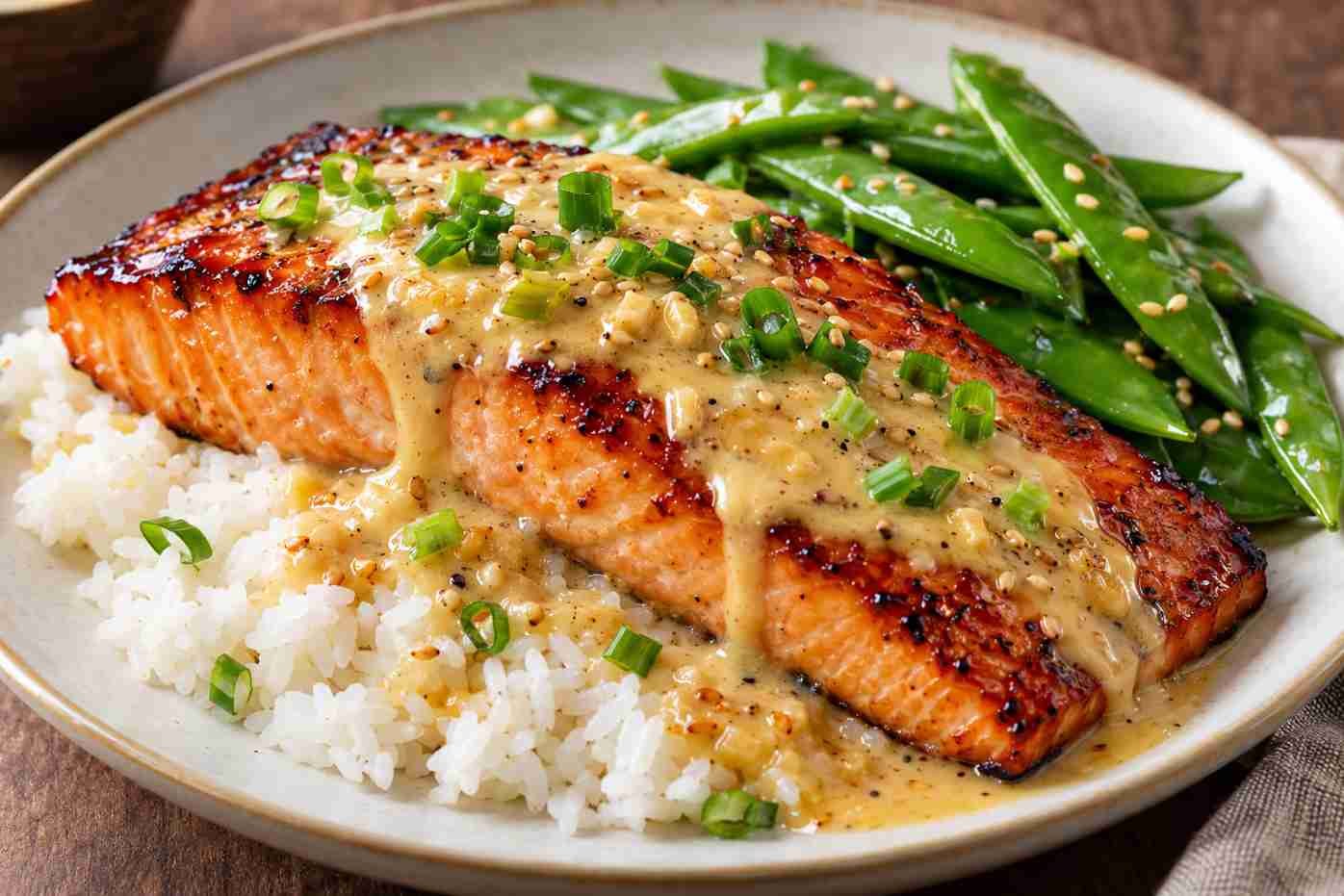
Miso Salmon with Sake Butter is a delicious restaurant-style seafood dish that combines tender salmon, a savory miso marinade, and a rich butter sauce made with Japanese sake. The combination creates a wonderful balance of sweet, salty, and savory flavors. The salmon is coated in a mixture of red miso paste, soy sauce, brown sugar, and rice vinegar before being roasted until tender. It is then served with a warm sake butter sauce flavored with fresh ginger and garlic.
Serve it with crisp snow peas and steamed rice, and you have a satisfying meal that feels special without requiring complicated cooking techniques. This homemade version takes inspiration from restaurant-style miso salmon but uses simple ingredients and easy cooking methods that work well in a regular kitchen.
What Is Miso Salmon with Sake Butter?
Miso Salmon with Sake Butter is a Japanese-inspired seafood dish made with salmon marinated in fermented soybean paste and topped with a buttery sake sauce. Miso brings a deep umami flavor, while brown sugar adds sweetness and soy sauce provides saltiness.
Sake is a traditional Japanese rice wine that adds a mild sweetness and depth to the butter sauce. When combined with butter, garlic, and ginger, it creates a smooth sauce that complements the rich flavor of salmon. The dish is commonly served with green vegetables and rice, making it a balanced and filling dinner.
What You Can Do Better
A few small details can make a noticeable difference when preparing this recipe at home.
- Give the salmon enough time to marinate: Let the fish sit in the miso mixture for at least one hour so it can absorb the flavors.
- Watch the miso glaze: Miso and brown sugar can burn quickly, so keep an eye on the salmon while it cooks.
- Use fresh ginger and garlic: Fresh ingredients give the sake butter sauce a much better aroma than dried alternatives.
- Do not overcook the salmon: Check the thickest part of the fish to prevent it from becoming dry.
- Keep the snow peas crisp: A short cooking time helps preserve their bright color and crunchy texture.
- Serve the sauce warm: The butter sauce tastes best when freshly prepared and served immediately.
Miso Salmon with Sake Butter Ingredients
This recipe makes four servings. You will need salmon fillets, red miso paste, a few pantry ingredients, and fresh vegetables.
For the Salmon and Marinade
- 1 pound fresh salmon fillets
- 4 tablespoons red miso paste
- 4 tablespoons soy sauce
- 4 tablespoons brown sugar
- 3 teaspoons rice vinegar
- 1 tablespoon warm water, if needed
For the Sake Butter Sauce
- 4 tablespoons unsalted butter
- 1/4 cup dry sake
- 1 tablespoon fresh ginger, minced
- 1 garlic clove, minced
- 1 tablespoon finely chopped shallots
- 1 tablespoon heavy cream (optional)
- 1 teaspoon fresh lime juice
- Salt and black pepper to taste
For Serving
- 1 cup fresh snow peas
- 2 cups cooked jasmine rice
- 1 tablespoon chopped green onions
- 1 teaspoon toasted sesame seeds
- 1 teaspoon cooking oil
- A pinch of salt
Also Read: Salmon Sushi Bake
How to Make Miso Salmon with Sake Butter
Step 1: Prepare the Miso Marinade
Start by taking a medium-sized mixing bowl. Add the red miso paste, soy sauce, brown sugar, and rice vinegar. Whisk everything together until the mixture becomes smooth. If it feels too thick, add a tablespoon of warm water and mix again. The marinade should be thick enough to coat the salmon evenly.
Step 2: Marinate the Salmon
Place the salmon fillets in a shallow dish and spread the miso marinade over each piece. Make sure the fish is coated on all sides. Cover the dish and refrigerate for at least one hour. This gives the salmon enough time to absorb the salty, sweet, and savory flavors of the marinade.
Step 3: Preheat the Oven
Preheat your oven to 400°F (200°C). Line a baking tray with parchment paper or lightly grease it with cooking oil. Remove the salmon from the refrigerator and allow any excess marinade to drip off. Arrange the fillets on the prepared baking tray, leaving a little space between each piece.
Step 4: Roast the Salmon
Place the baking tray in the oven and roast the salmon for approximately 10 to 12 minutes. The exact cooking time depends on the thickness of the fillets. The fish should become opaque and separate easily when tested with a fork. For food safety, check that the thickest part reaches an internal temperature of 145°F (63°C).
Step 5: Prepare the Sake Butter Sauce
While the salmon is cooking, melt one tablespoon of butter in a saucepan over medium heat. Add the minced ginger, garlic, and shallots. Cook for about one to two minutes until fragrant.
Pour in the dry sake and allow the mixture to simmer for five to seven minutes. This helps reduce the liquid and concentrate its flavor. Add the optional heavy cream, then lower the heat and gradually whisk in the remaining cold butter, one tablespoon at a time.
Continue whisking until the sauce becomes smooth and slightly thickened. Finish with fresh lime juice, salt, and black pepper. Avoid boiling the sauce after adding the butter because excessive heat can cause it to separate.
Step 6: Blanch the Snow Peas
Bring a saucepan of salted water to a boil. Add the snow peas and cook for approximately one to two minutes. Transfer them immediately to a bowl of ice water to stop the cooking process. Drain and pat them dry.
If you prefer a little extra flavor, toss the snow peas briefly in a pan with a teaspoon of cooking oil and a small pinch of salt.
Step 7: Assemble and Serve
Place a serving of cooked jasmine rice on each plate. Add one miso-glazed salmon fillet and arrange the snow peas alongside it. Spoon the warm sake butter sauce over the salmon and allow a little to run onto the rice.
Finish with chopped green onions and toasted sesame seeds. Serve immediately while the salmon is tender and the butter sauce is warm.
Tips for Making the Best Miso Salmon
- Choose good-quality salmon: Atlantic, sockeye, and coho salmon are all suitable choices. Look for firm fillets with a fresh smell.
- Adjust the miso flavor: Red miso has a stronger and saltier taste, while white miso is milder and sweeter.
- Check the thickness: Thin salmon fillets cook faster than thick portions, so adjust the cooking time accordingly.
- Prepare the sauce carefully: Keep the heat low when adding butter to achieve a smooth consistency.
- Do not overcook the vegetables: Snow peas should remain slightly crunchy rather than becoming soft.
Also Read: Salmon Pasta Recipe
Substitutions and Variations
Sake: If you cannot find dry sake, use a non-alcoholic cooking alternative or vegetable stock with a small splash of rice vinegar. The flavor will be slightly different, but it will still work with the salmon.
Red Miso: White miso paste is a good substitute if you prefer a milder and sweeter flavor. You may also want to reduce the soy sauce slightly to control the saltiness.
Salmon: You can use the same marinade with firm white fish such as cod or halibut. Adjust the cooking time according to the thickness of the fish.
Snow Peas: If snow peas are unavailable, use asparagus, broccoli, green beans, or bok choy.
Extra Spice: Add a pinch of red pepper flakes or a little chili oil to the finished sauce if you enjoy spicy food.
What to Serve with Miso Salmon
Miso Salmon with Sake Butter tastes wonderful with simple sides that balance its rich and savory flavors. Here are a few options to try:
- Steamed Jasmine Rice: Its mild flavor pairs perfectly with the miso glaze and buttery sauce.
- Garlic Bok Choy: Lightly sautéed bok choy adds freshness and a pleasant crunch.
- Roasted Asparagus: Its slightly earthy flavor balances the richness of the salmon.
- Cucumber Salad: A refreshing cucumber salad with rice vinegar and sesame oil makes a nice side dish.
- Steamed Broccoli: Broccoli is an easy vegetable option that works well with the extra sauce.
Also Read: Miso Glazed Salmon Recipe
How to Store and Reheat Leftovers
Allow leftover salmon to cool before transferring it to an airtight container. Refrigerate it within two hours of cooking and consume it within three to four days. If possible, store the sake butter sauce separately.
To reheat, place the salmon in a covered oven-safe dish and warm it at a low temperature until heated through. You can also use a microwave on reduced power in short intervals. Avoid overheating because it can make the fish dry.
Reheat the butter sauce gently over low heat while whisking. If it becomes too thick, add a small splash of warm water to adjust the consistency.
Miso Salmon with Sake Butter Nutritional Information
The following nutritional information is an estimate per serving, assuming the recipe makes four servings and includes salmon, snow peas, rice, and a portion of the sake butter sauce. Actual values may vary depending on the ingredients and portion sizes used.
| Nutritional Information | Amount Per Serving |
|---|---|
| Calories | 490 kcal |
| Total Fat | 29 g |
| Saturated Fat | 13 g |
| Cholesterol | 105 mg |
| Sodium | 1,350 mg |
| Total Carbohydrates | 28 g |
| Dietary Fiber | 2 g |
| Total Sugars | 12 g |
| Protein | 31 g |
Note: Nutritional values are approximate and are not laboratory-tested. Sodium content can be reduced by using low-sodium soy sauce and adjusting the amount of miso paste.
Also Read: Miso Salmon Rice Bowl Recipe
Frequently Asked Questions
1. Can I make Miso Salmon with Sake Butter without sake?
Yes. You can replace sake with vegetable stock and a small amount of rice vinegar. The flavor will be different, but the sauce will still complement the salmon.
2. Can I use white miso instead of red miso?
Yes. White miso has a milder and slightly sweeter flavor than red miso. It works well in this recipe if you prefer a less intense taste.
3. How long should I marinate salmon in miso?
Marinate the salmon for at least 30 minutes, although around one hour is recommended for better flavor. Always keep the fish refrigerated while marinating.
4. How do I know when the salmon is cooked?
The salmon should look opaque and flake easily with a fork. For a reliable food safety check, use a food thermometer and make sure the thickest part reaches 145°F (63°C).
5. Can I cook miso salmon in a pan instead of an oven?
Yes. Heat a little cooking oil in a skillet over medium heat and cook the salmon until done. Because the marinade contains brown sugar, avoid high heat as the glaze can burn quickly.
6. What vegetables go well with miso salmon?
Snow peas, asparagus, bok choy, broccoli, and green beans are excellent choices. Their fresh flavors and textures balance the rich butter sauce.
7. Can I prepare the miso marinade ahead of time?
Yes. You can prepare the marinade a day ahead and store it in a covered container in the refrigerator. Coat the salmon before cooking.