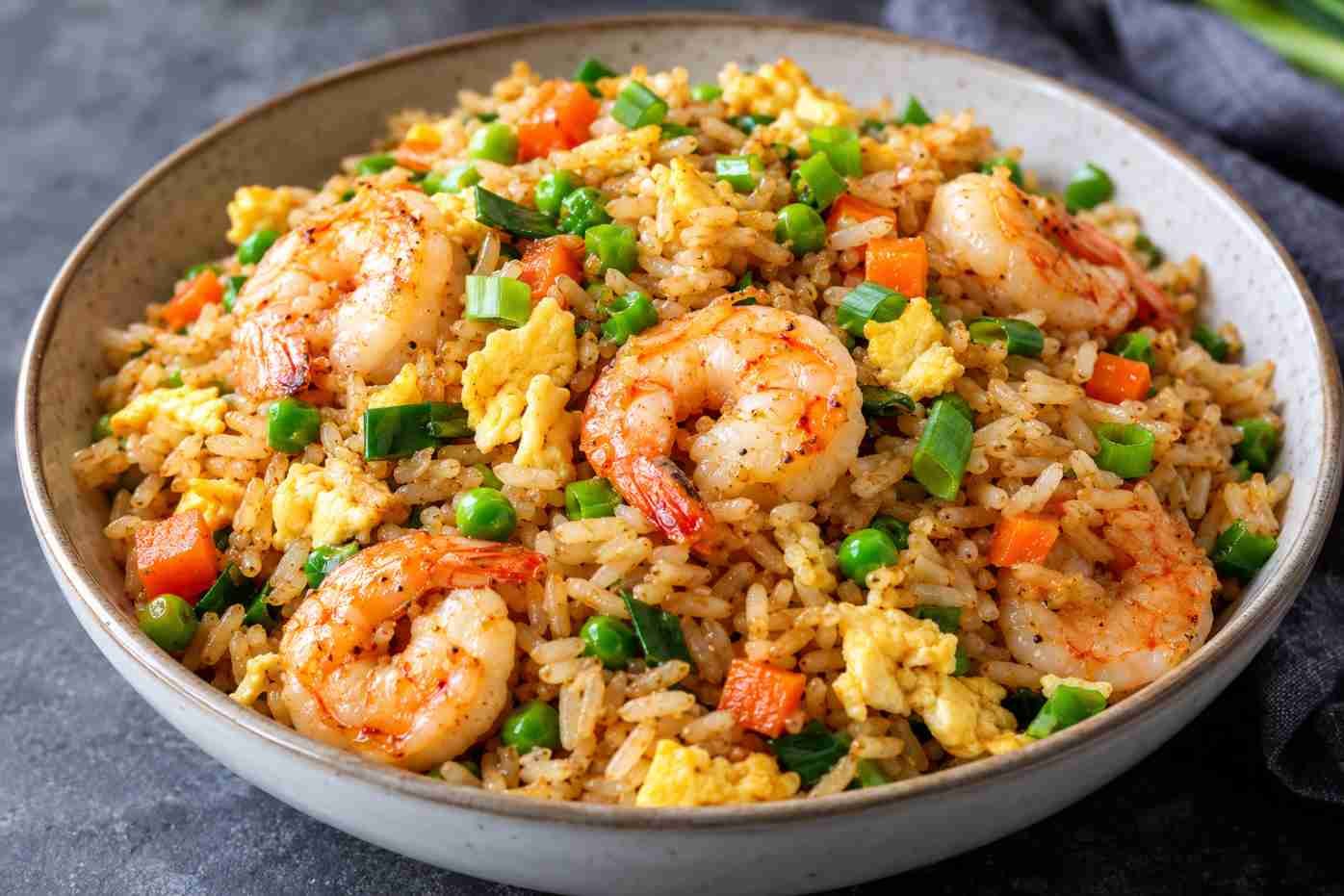
Shrimp fried rice is a simple, satisfying meal made with tender shrimp, fluffy rice, scrambled eggs, and colorful vegetables tossed together with savory seasonings. It brings together everything you want in a quick dinner without requiring a long list of ingredients or complicated cooking steps. The best part is that you can prepare it in one pan, making it a practical choice for busy weeknights, relaxed weekends, or whenever you have leftover rice in the refrigerator.
This homemade shrimp fried rice has a delicious balance of garlic, ginger, soy sauce, and sesame oil. The shrimp cook quickly, the vegetables add a little crunch, and the rice absorbs all the flavors as it fries. Serve it on its own for a complete meal or pair it with your favorite Asian-inspired side dish.
Recipe Details
- Preparation Time: 10 minutes
- Cooking Time: 15 minutes
- Total Time: 25 minutes
- Servings: 4
- Cuisine: Asian-inspired
- Course: Main Course
- Cooking Method: Stir-frying
- Difficulty: Easy
Ingredients for Shrimp Fried Rice
The ingredients in this recipe are easy to find at most grocery stores. Day-old rice works particularly well because the grains are firmer and less likely to become mushy during cooking.
Main Ingredients
- 1 pound (450 g) raw shrimp, peeled and deveined
- 4 cups cooked and chilled white rice
- 2 tablespoons vegetable oil, divided
- 3 large eggs, lightly beaten
- 1 cup frozen peas and carrots, thawed
- 3 green onions, thinly sliced
- 3 cloves garlic, finely minced
- 1 teaspoon fresh ginger, finely grated
For the Sauce
- 3 tablespoons soy sauce, preferably reduced-sodium
- 1 teaspoon toasted sesame oil
- 1/4 teaspoon ground black pepper
- Salt to taste
- 1 teaspoon rice vinegar, optional
Also Read: Chinese Fried Rice
How to Make Shrimp Fried Rice
Step 1: Prepare the Ingredients
Before turning on the stove, make sure the shrimp are peeled, deveined, and patted dry with paper towels. If you are using frozen shrimp, thaw them completely and remove any excess moisture.
Break up the chilled rice with a fork so the grains are separated. Beat the eggs in a small bowl, chop the green onions, and mince the garlic and ginger. Mix the soy sauce, sesame oil, black pepper, and rice vinegar in another small bowl if you prefer to have the seasoning ready before cooking.
Step 2: Cook the Shrimp
Heat 1 tablespoon of vegetable oil in a large skillet or wok over medium-high heat. Add the shrimp in a single layer and season lightly with salt and black pepper.
Cook for about 2–3 minutes per side, depending on their size, until the shrimp turn pink, opaque, and are cooked through. Avoid leaving them in the pan for too long, as overcooked shrimp can become rubbery.
Transfer the shrimp to a clean plate and set aside.
Step 3: Scramble the Eggs
Add a little of the remaining oil to the same pan if needed. Pour in the beaten eggs and let them sit briefly before stirring gently with a spatula.
Cook until the eggs are just set but still soft. Break them into small pieces and transfer them to a plate. Cooking the eggs separately helps prevent them from becoming lost in the rice.
Step 4: Cook the Garlic, Ginger, and Vegetables
Add the remaining vegetable oil to the skillet. Stir in the minced garlic, grated ginger, and the white parts of the green onions.
Cook for about 30 seconds, stirring frequently, until fragrant. Add the peas and carrots and stir-fry for another 2–3 minutes, or until the vegetables are heated through.
Keep the garlic moving around the pan so it does not burn and develop a bitter taste.
Step 5: Stir-Fry the Rice
Add the chilled rice to the skillet. Use a spatula to separate any clumps and toss the grains with the vegetables and aromatics.
Spread the rice across the pan and let it cook for a minute before stirring again. Continue cooking for approximately 3–4 minutes, allowing the rice to heat through and develop a slightly toasted texture.
For the best result, use a large pan that gives the rice enough room to fry instead of steam.
Step 6: Add the Sauce
Pour the soy sauce mixture over the rice, distributing it evenly rather than pouring it all into one spot. Toss well so the rice is lightly coated and the vegetables are evenly mixed throughout.
Taste a small amount before adding extra salt because soy sauce already provides plenty of seasoning. If you prefer a stronger savory flavor, add a little more soy sauce, one teaspoon at a time.
Step 7: Combine Everything and Serve
Return the cooked shrimp and scrambled eggs to the skillet. Toss everything together and cook for another 1–2 minutes, until all the ingredients are hot.
Stir in the green parts of the sliced green onions just before removing the pan from the heat. Serve the shrimp fried rice immediately while the rice is hot and the shrimp are tender.
Also Read: Steak Fried Rice
What You Can Do Better
A few simple cooking choices can make a noticeable difference in the texture and flavor of homemade shrimp fried rice.
Use Cold, Day-Old Rice
Freshly cooked rice contains more moisture and can turn sticky when stir-fried. Chilled rice holds its shape better and allows the grains to develop a lightly toasted exterior. If you do not have leftover rice, spread freshly cooked rice in a shallow container to cool quickly, then refrigerate it before frying. Do not leave cooked rice sitting at room temperature for an extended period.
Dry the Shrimp Before Cooking
Wet shrimp release extra moisture into the pan, making it harder to brown them properly. Patting them dry helps improve their texture and flavor.
Avoid Overcooking the Shrimp
Shrimp cook quickly, so remove them from the pan as soon as they turn opaque and are cooked through. Add them back near the end to keep them tender.
Cook in Batches if Necessary
A crowded skillet traps steam and makes the rice soft. If your pan is small, cook the ingredients in batches and combine them at the end.
Adjust the Seasoning Gradually
Different soy sauce brands vary in saltiness. Start with the recommended amount, taste the rice, and add more only if needed. A little sesame oil at the end can also add a pleasant toasted aroma without making the dish too oily.
Add Vegetables You Already Have
Broccoli florets, finely chopped bell peppers, sweet corn, mushrooms, or shredded cabbage can all work well. Cut the vegetables into small, similar-sized pieces so they cook evenly.
Also Read: Ham Fried Rice Recipe
Nutritional Information
The following table provides estimated nutrition information for one serving, assuming the recipe makes four servings. Actual values will vary depending on the type of rice, the size of the shrimp, the amount of oil used, and the soy sauce brand.
| Nutrient | Approximate Amount Per Serving |
|---|---|
| Calories | 480 kcal |
| Protein | 35 g |
| Total Carbohydrates | 54 g |
| Dietary Fiber | 3 g |
| Total Fat | 13 g |
| Saturated Fat | 3 g |
| Cholesterol | 260 mg |
| Sodium | 800 mg |
| Total Sugars | 3 g |
Shrimp provide protein, while rice supplies carbohydrates for energy. Eggs contribute additional protein, and peas and carrots add fiber and other nutrients. To reduce sodium, choose reduced-sodium soy sauce and avoid adding extra salt unless necessary. These figures are estimates, not laboratory-tested nutritional values.
Tips for Storing and Reheating Shrimp Fried Rice
Refrigeration
Allow the food to stop steaming, then transfer it promptly to a shallow, airtight container and refrigerate within two hours of cooking. For food safety, use refrigerated leftovers within 3–4 days.
Freezing
For longer storage, divide the cooled fried rice into meal-sized portions and freeze in airtight, freezer-safe containers. For the best quality, use within about two months. Thaw in the refrigerator before reheating when practical.
Reheating
Reheat the rice in a skillet over medium heat with a small splash of water. Stir frequently until the rice and shrimp are steaming hot throughout. You can also use a microwave-safe container, covering it loosely and stirring halfway through. Avoid repeatedly cooling and reheating the same portion.
Also Read: Egg Fried Rice
Frequently Asked Questions
Can I use freshly cooked rice for shrimp fried rice?
Yes. Freshly cooked rice can work, but it should be cooled quickly and chilled before frying. Rice that is too warm or moist is more likely to clump together and become mushy.
Can I use frozen shrimp?
Absolutely. Thaw the shrimp completely, drain them, and pat them dry before cooking. Frozen shrimp are convenient and work well in this recipe.
What type of rice is best for shrimp fried rice?
Long-grain white rice, jasmine rice, and basmati rice are good choices because they generally produce separate grains. Brown rice is another option if you prefer a nuttier flavor and more fiber.
Can I make shrimp fried rice without eggs?
Yes. Simply leave out the eggs. You can add extra vegetables or another protein of your choice to make the dish more filling.
How do I prevent shrimp fried rice from becoming soggy?
Use chilled rice, dry the shrimp thoroughly, cook over medium-high to high heat, and avoid overcrowding the pan. Add the sauce gradually so the rice does not become too wet.
Is shrimp fried rice good for meal prep?
Yes. Divide it into individual portions and refrigerate promptly. Keep it refrigerated for 3–4 days and reheat each portion until steaming hot before eating.
Can I make this recipe gluten-free?
Yes. Replace regular soy sauce with certified gluten-free tamari or another suitable gluten-free alternative. Check the labels of all packaged ingredients to make sure they meet your dietary requirements.