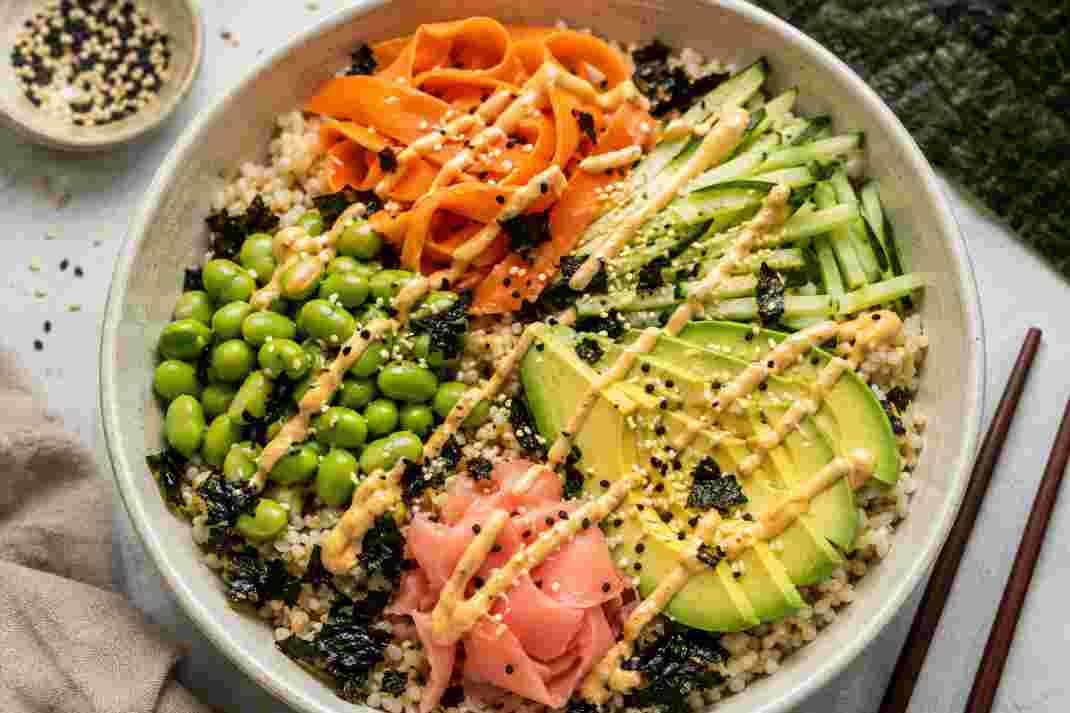
If you love sushi but don’t feel like rolling tiny pieces of rice and vegetables, this Veggie Sushi Bowl is the easy answer. It has all the fresh, savory flavors you expect from a vegetable sushi roll, but everything is layered in a bowl instead. Brown rice, creamy avocado, crisp cucumber, sweet carrot, edamame, nori and a quick spicy mayo come together for a filling meal that feels a little special without being difficult to make. This recipe is inspired by the simple, build-your-own approach of Cookie and Kate’s vegetarian sushi bowl.
Why Make a Veggie Sushi Bowl?
There is something wonderfully practical about a sushi bowl. You get the contrast of warm rice, crunchy vegetables, creamy avocado and salty nori without having to worry about perfect rolling technique. It is also easy to adjust depending on what you have in the refrigerator. Add extra vegetables, swap the rice, make the sauce milder or turn up the heat—the bowl is very forgiving.
Ingredients
For the Rice
- 2 cups short-grain brown rice, rinsed well
- 1 sheet dried nori
- 3 tablespoons rice vinegar
- 1½ teaspoons low-sodium soy sauce or tamari
- 1 tablespoon sugar or maple syrup
- ½ teaspoon salt
For the Toppings
- 2 cups shelled edamame, fresh or frozen
- 2 large carrots
- 1 ripe avocado
- 1 small cucumber
- 1–2 tablespoons sesame seeds
- Pickled ginger, for serving
For the Spicy Mayo
- ⅓ cup mayonnaise
- 1–2 tablespoons sriracha, depending on how spicy you like it
Also Read: Miso Salmon Rice Bowl Recipe
How to Make Veggie Sushi Bowl
1. Cook the Rice
Bring a large pot of water to a boil. Add the rinsed brown rice and cook until tender, following the cooking time recommended for your rice. Drain well, return the rice to the warm pot and cover it for about 10 minutes. Fluff gently with a fork.
2. Season the Rice
While the rice is steaming, combine the rice vinegar, soy sauce or tamari, sugar and salt in a small saucepan. Warm gently, stirring until the sugar dissolves. Pour the mixture over the warm rice and fold it in carefully.
3. Add the Nori
Warm the nori in a dry skillet over medium-low heat for a few minutes, turning it once, until crisp. Tear it into small pieces and crumble it over the seasoned rice. Stir gently so the nori is spread throughout.
4. Prepare the Edamame
Cook the edamame in boiling water until heated through and tender, then drain. If using frozen edamame, this usually takes only a few minutes.
5. Prepare the Vegetables
Peel the carrots into thin ribbons using a vegetable peeler. Cut the cucumber into thin matchsticks. Slice the avocado just before assembling the bowls so it stays fresh and creamy.
6. Mix the Spicy Mayo
Stir the mayonnaise and sriracha together in a small bowl until smooth. Taste and add a little more sriracha if you want extra heat. For a lighter sauce, you can replace part of the mayonnaise with plain Greek yogurt.
7. Assemble the Bowls
Divide the seasoned rice between four bowls. Arrange the edamame, carrot ribbons, cucumber and avocado over the rice. Drizzle generously with spicy mayo, then finish with sesame seeds and a little pickled ginger.
Also Read: Poke Bowl Recipe
What You Can Do Better
The best part of a sushi bowl is that you don’t have to follow a strict topping list. If you want more crunch, add thinly sliced radishes or cabbage. Fresh mango gives the bowl a sweet contrast, while green onions add a sharp, fresh bite. You can also add baked tofu if you want a more substantial source of plant-based protein.
For the best texture, keep the vegetables crisp and slice the avocado right before serving. If you’re preparing the bowls for lunch, store the rice and toppings separately when possible and add the avocado and spicy mayo just before eating.
Easy Variations
| Variation | What to Add |
|---|---|
| Extra Crunch | Radishes, cabbage or crispy cucumber |
| More Protein | Baked tofu or extra edamame |
| Sweet & Fresh | Mango or pineapple |
| More Heat | Extra sriracha, chili crisp or sliced jalapeño |
| Gluten-Free | Use certified gluten-free tamari |
| Vegan | Use vegan mayonnaise for the spicy sauce |
Tips for the Best Sushi Bowl
- Don’t overcook the rice: You want grains that are tender but still have some texture.
- Season while the rice is warm: The vinegar mixture distributes more evenly when added to warm rice.
- Keep the vegetables fresh: Thinly sliced, crisp vegetables make the bowl much more enjoyable.
- Adjust the sauce: Start with less sriracha and add more gradually. It is easier to increase the heat than to tone it down.
- Serve immediately: The contrast between the seasoned rice, crisp vegetables and creamy avocado is best when everything is freshly assembled.
Also Read: Blueberry Bread Recipe
How to Store Leftovers
Store the cooked rice, vegetables and edamame in separate airtight containers in the refrigerator. The components can generally be kept for a few days, but avocado is best sliced fresh when you are ready to eat. Keep the spicy mayo in a covered container and assemble each bowl just before serving.
Nutrition Information
The approximate nutrition below is based on four servings and will vary depending on the exact ingredients and quantities used. It is intended as a general guide rather than a precise nutritional analysis.
| Nutrient | Approximate Amount per Serving |
|---|---|
| Calories | Approximately 590 kcal |
| Protein | Approximately 16 g |
| Carbohydrates | Approximately 84 g |
| Fat | Approximately 25 g |
| Fiber | Approximately 10 g |
| Sodium | Varies with soy sauce, tamari and mayonnaise |
For reference, the inspiration recipe lists about 596 calories, 16.5 g protein, 84.4 g carbohydrates and 25 g fat per serving.
Frequently Asked Questions
Can I use white rice instead of brown rice?
Absolutely. Short-grain white rice works well and gives the bowl a softer, more traditional sushi-rice feel. Just adjust the cooking method and time according to the rice you are using.
Can I make this bowl vegan?
Yes. The rice, vegetables and edamame are naturally plant-based. Simply use vegan mayonnaise for the spicy mayo.
Can I prepare sushi bowls ahead of time?
Yes. Cook the rice and edamame ahead and prepare the vegetables separately. Assemble the bowls when you’re ready to eat, adding fresh avocado and sauce at the end.
What can I use instead of edamame?
Chickpeas, baked tofu or shelled peas can work if you don’t have edamame. Edamame is especially good here because its mild, slightly nutty flavor fits naturally with the other sushi-inspired ingredients.