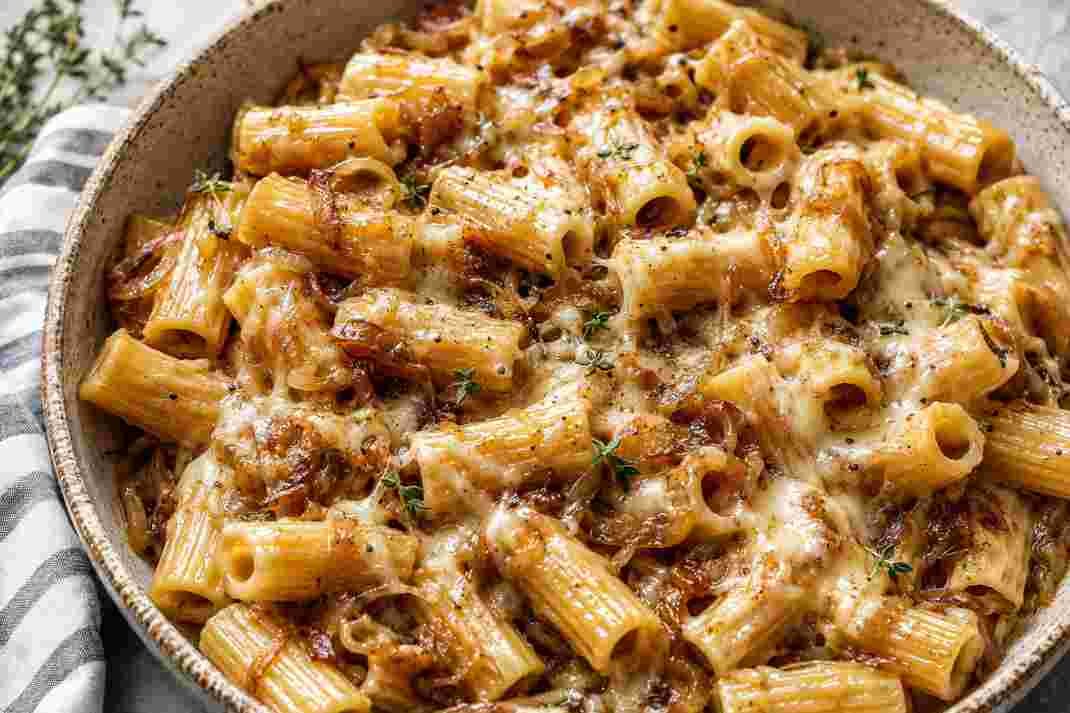
French Onion Pasta takes everything people love about classic French onion soup and turns it into a cozy, creamy pasta dinner. Slowly caramelized onions bring a deep, slightly sweet flavor, while garlic, thyme, Dijon mustard, and Worcestershire sauce add plenty of savory depth. Finish it with Gruyère, Parmesan, and a little cream, and you get a rich pasta that feels special without requiring a complicated cooking process.
Why This Pasta Works
The onions are the real star here. They need time to cook slowly until they become soft, golden brown, and jammy. That extra time gives the dish its signature French onion flavor. Once the onions are ready, the rest of the recipe comes together in the same pan, which means fewer dishes and a sauce that picks up all those browned, savory bits from the bottom.
Ingredients
| Ingredient | Amount |
|---|---|
| Unsalted butter | 3 tablespoons |
| Yellow onions, thinly sliced | 2 large |
| Kosher salt | 1/4 teaspoon, plus more to taste |
| Ground black pepper | 1/4 teaspoon |
| Garlic, minced | 4 cloves |
| Fresh thyme, chopped | 1 tablespoon |
| Dry white wine | 1/2 cup |
| Sherry vinegar | 1 tablespoon |
| Worcestershire sauce | 1 tablespoon |
| Dijon mustard | 1 teaspoon |
| Rigatoni or other tube-shaped pasta | 8 ounces |
| Low-sodium beef broth | 4 cups |
| Gruyère cheese, shredded | 1 cup |
| Parmesan cheese, grated | 1/4 cup |
| Half-and-half or heavy cream | 1/4 cup |
Also Read: Sloppy Joe Casserole
How to Make French Onion Pasta
1. Caramelize the onions
Melt the butter in a large deep skillet or Dutch oven over medium-low heat. Add the sliced onions, salt, and black pepper. Cook slowly for about 35 to 45 minutes, stirring every few minutes. The onions should become very soft, deeply golden brown, and almost jammy. If they start sticking to the pan, add a tablespoon of water and scrape the bottom gently.
2. Add the garlic and thyme
Once the onions are beautifully caramelized, stir in the garlic and fresh thyme. Cook for about a minute, just until the garlic smells fragrant. You don’t want to brown the garlic too much because it can turn bitter.
3. Deglaze the pan
Pour in the white wine and sherry vinegar. Use a wooden spoon to scrape up the browned bits from the bottom of the pan. Let everything simmer for about a minute. Those little browned bits add a lot of flavor to the finished pasta.
4. Add the seasonings and pasta
Stir in the Worcestershire sauce and Dijon mustard. Move the onions to one side of the pan and add the rigatoni. Pour the beef broth over the pasta. The liquid should mostly cover the noodles.
5. Cook the pasta
Bring the broth to a simmer, then cover the pan and reduce the heat slightly. Cook until the pasta is tender but still has a little bite, usually around 15 minutes depending on the pasta you use. Stir every few minutes so the noodles don’t stick together. If there is still a lot of liquid once the pasta is cooked, remove the lid and let it simmer for another minute or two.
6. Make it creamy and cheesy
Turn the heat down and add the Gruyère a little at a time, stirring until it melts into the pasta. Add the Parmesan and half-and-half, then stir until the sauce is creamy and smooth. Taste and adjust the salt and pepper before serving.
Also Read: Steak Fried Rice
What You Can Do Better
- Don’t rush the onions: The biggest flavor boost comes from properly caramelizing them. High heat may brown them quickly, but it won’t give you the same soft, sweet depth.
- Use freshly grated cheese: Gruyère and Parmesan melt more smoothly when grated fresh rather than using pre-shredded cheese.
- Keep an eye on the pasta: One-pot pasta can go from perfectly cooked to too soft fairly quickly. Start checking it a few minutes before the suggested cooking time.
- Use low-sodium broth: The cheese, Worcestershire sauce, and seasoning already bring plenty of salt, so using low-sodium broth gives you better control.
- Don’t skip the deglazing: Scraping the browned bits from the pan after adding the wine helps carry that deep onion flavor throughout the sauce.
Easy Substitutions
If you don’t have rigatoni, penne, ziti, or another sturdy tube-shaped pasta can work well. Gruyère gives the dish its classic French onion character, but you can use Swiss cheese if needed. For the wine, use a dry white wine such as Sauvignon Blanc or Pinot Grigio. If you prefer not to cook with wine, replace it with additional broth and keep the vinegar for a little acidity.
Also Read: Beef Burrito Recipe
How to Store
Let leftover pasta cool before transferring it to an airtight container. Refrigerate for up to 4 days. When reheating, add a small splash of broth, milk, or cream to loosen the sauce because the pasta will absorb some of the liquid as it sits. Reheat gently in the microwave or in a skillet over medium-low heat.
Nutrition Information
The approximate nutrition per serving, based on four servings, is shown below. Actual values can vary depending on the brands and ingredients used.
| Nutrient | Amount Per Serving |
|---|---|
| Calories | 549 kcal |
| Carbohydrates | 54 g |
| Protein | 25 g |
| Fat | 24 g |
| Saturated Fat | 14 g |
| Fiber | 3 g |
| Sugar | 6 g |
| Cholesterol | 70 mg |
| Calcium | 458 mg |
| Iron | 2 mg |
Also Read: Marry Me Chickpeas
Frequently Asked Questions
Can I make French Onion Pasta without wine?
Yes. Replace the wine with additional beef broth. The sherry vinegar still provides some acidity and helps balance the rich cheese and onions.
What type of onion is best?
Yellow onions are a great choice because they develop a rich, savory-sweet flavor when cooked slowly. They also hold up well during the long caramelization process.
Can I use another type of cheese?
Yes. Gruyère is ideal for the classic French onion flavor, but Swiss cheese can be used as an alternative. A little extra Parmesan can also add more savory flavor.
Can I make this pasta vegetarian?
Yes, but you’ll need to replace the beef broth with a good-quality vegetable broth and use a vegetarian Worcestershire-style sauce if your usual Worcestershire sauce contains anchovies.
Can I prepare French Onion Pasta ahead of time?
You can make it ahead and refrigerate the leftovers, but it is best served fresh. The pasta continues absorbing the sauce as it sits, so add a splash of broth, milk, or cream when reheating.